13.03.2026
During the workshop the participants were introduced to the theoretical foundations of machine learning—with a focus on deep learning—before moving on to hands-on sessions. By combining lectures with interactive coding exercises, the DKRZ team ensured that attendees not only understood the concepts but also gained practical skills they could directly apply in their own research. During these sessions, participants built, trained, and evaluated their own deep learning models for specific climate applications, including classification, gap-filling, and statistical downscaling.
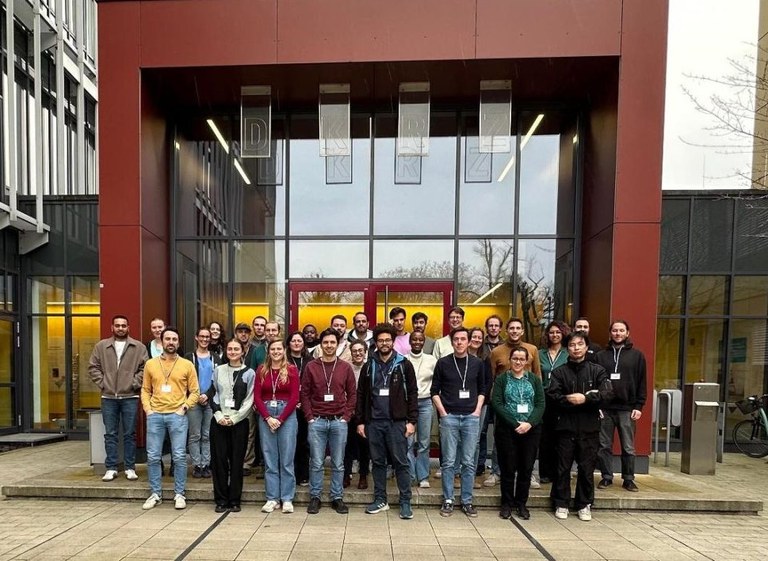
The workshop brought together researchers from several institutes - including the Max Planck Institute for Meteorology, Helmholtz Center Hereon, German Weather Service (DWD), University of Amsterdam, Universities of Leipzig, Hamburg, Bremen as well as of Würzburg, Alfred-Wegener-Institute for Polar- and Marine Research, Karlsruhe Institute for Technology, and Federal Maritime and Hydrographic Agency (BSH). The participants ranged from PhD candidates to senior scientists, creating a dynamic learning environment enriched by varied levels of expertise and perspectives.
Beyond the technical training, the workshop also served as a platform for exchange and networking. Researchers had the opportunity to discuss challenges, share ideas, and explore applications of deep learning in climate science.